



Description
Chicken netting is an essential component of many poultry enclosures, helping to establish a defined boundary between birds and the surrounding environment. Whether used for a small flock or a larger free-range poultry area, the correct fencing material can help maintain containment while providing an additional physical barrier against unwanted animals.
Our chicken netting is designed for outdoor agricultural applications, where strength, durability and dependable performance are important considerations. It provides an alternative to lightweight traditional chicken wire for customers who require a stronger wire fencing structure.
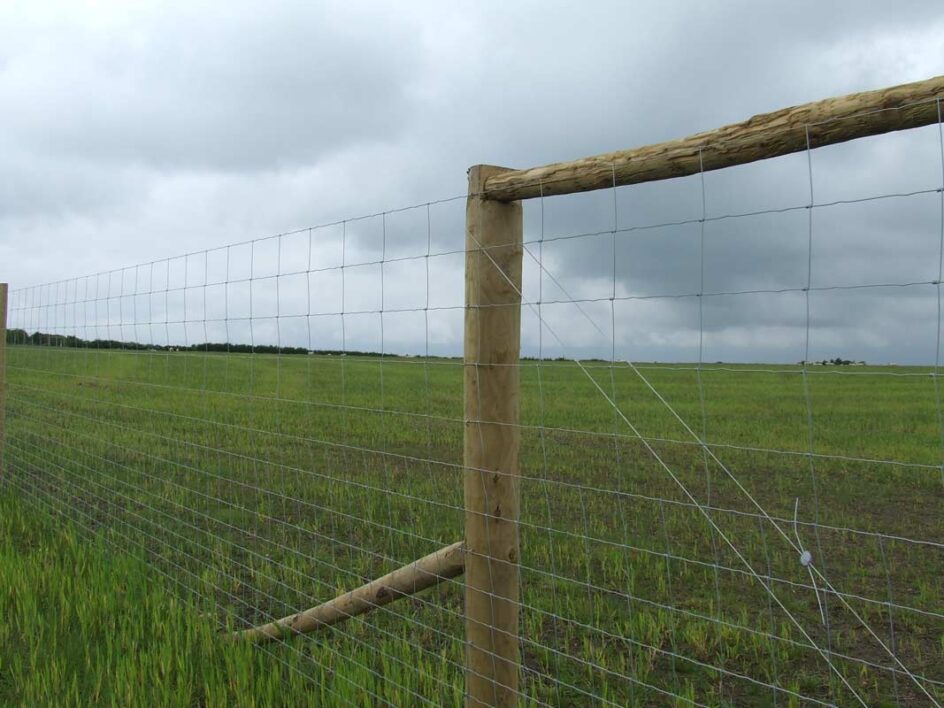
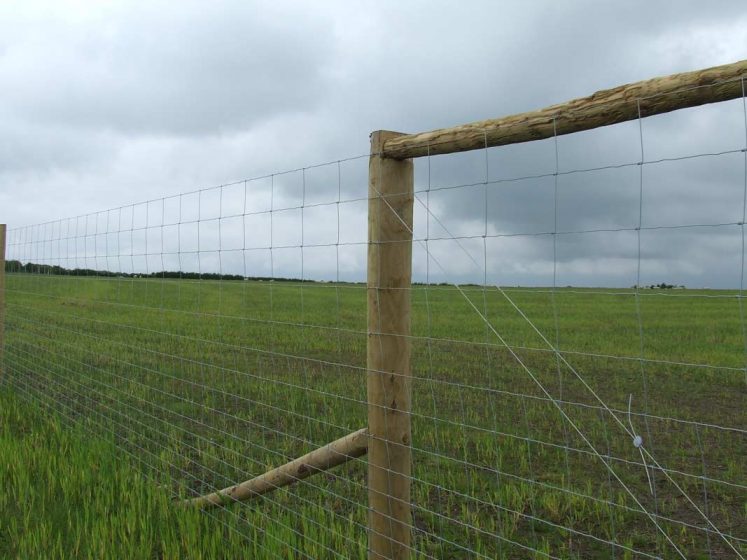
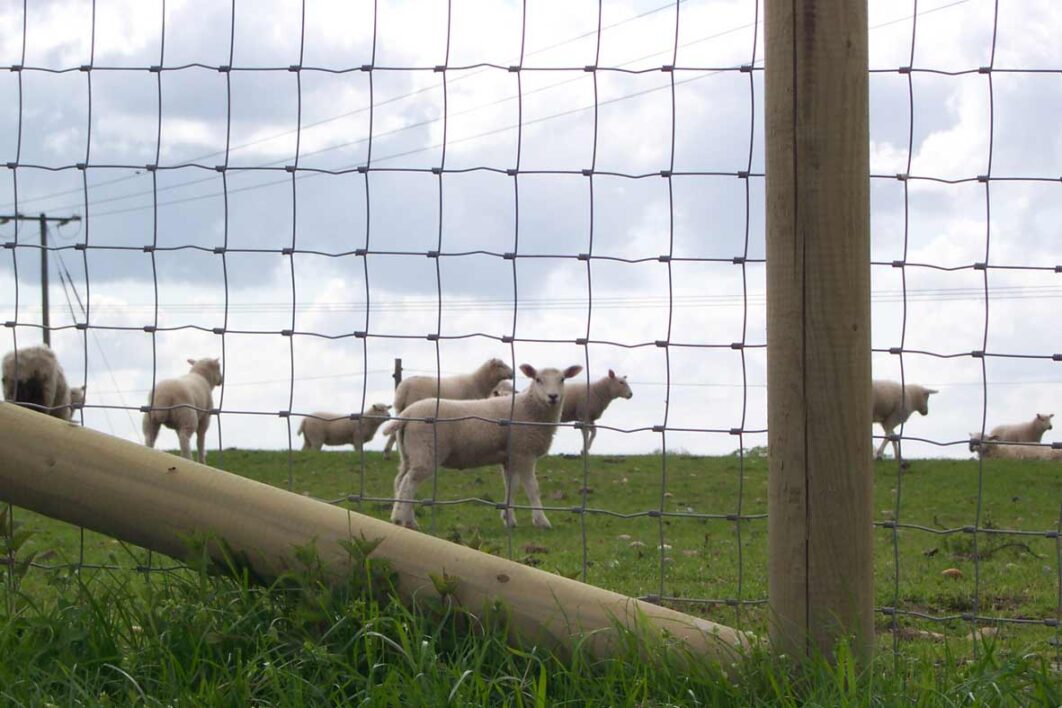
The netting incorporates a series of horizontal line wires and vertical stay wires, creating a connected mesh across the length of the roll. This construction forms a continuous barrier that can be attached to suitable timber or steel fencing posts.
For poultry owners, the main benefit is the ability to create a dedicated area where chickens can be managed more effectively. This may include free-range enclosures, outdoor runs, grazing areas or boundaries around poultry housing.
The fencing also helps restrict access from other animals, although the level of predator protection will depend on the mesh openings, installation method and any additional protective measures used.
Chicken Netting Sizes and Specifications
Our Chicken Netting is available in the following options:
|
Product specification |
Roll length |
|
1800mm x 50mm x 19kg |
50m |
|
LHT15/158/8 |
50m |
|
LHT15/158/8 |
100m |
The LHT15/158/8 specification comprises 15 horizontal line wires, a height of 158cm and 8cm spacing between vertical stay wires.
Understanding Chicken Netting Sizes – What Does LHT15/158/8 Mean?
Our chicken netting is available in several specifications, including products identified by codes such as LHT15/158/8.
These codes provide important information about the construction and dimensions of the wire netting.
The letters LHT stand for Light High Tensile, identifying the type of fencing wire used.
The three numbers then describe the main measurements of the netting.
- 15 – Number of line wires: The netting contains 15 horizontal wires running along the length of the roll.
- 158 – Overall netting height: The fencing measures 158cm in height, equivalent to 1,580mm.
- 8 – Distance between stay wires: Vertical stay wires are spaced approximately 8cm, or 80mm, apart.
This means that LHT15/158/8 netting has 15 horizontal line wires, an overall height of 1.58 metres and vertical stay wires positioned at 80mm intervals.
The number of line wires influences the vertical mesh arrangement, while the stay wire spacing determines the horizontal width of the openings.
These measurements are especially important when selecting poultry fencing because the size and arrangement of mesh openings affect which animals may be able to pass through the fence.
It is worth noting that the numbers do not describe the diameter of the wire itself. Wire thickness is a separate specification.
1800mm x 50mm x 19kg Chicken Netting – 50m Roll
Our 1800mm x 50mm x 19kg Chicken Netting is supplied in a 50 metre roll, providing an alternative specification for customers seeking poultry fencing material.
The product is listed with a height of 1,800mm and a 50mm measurement, together with a stated roll weight of 19kg.
Unlike the LHT product code, these measurements are presented in a different format. Customers should confirm the precise mesh dimensions and wire construction where these details are important for their particular installation.
At 1.8 metres high, this option provides a taller netting product than the LHT15/158/8 specification.
It may therefore be worth considering where additional height is required around a poultry enclosure, provided the mesh construction is suitable for the birds being kept and the risks present.
The 50m roll length also makes it practical for smaller installations, shorter boundaries or individual sections of a larger poultry fencing project.
LHT15/158/8 Chicken Netting – 50m Roll
The LHT15/158/8 Chicken Netting – 50m Roll provides 1.58 metre high poultry fencing manufactured using light high tensile steel wire.
With 15 horizontal line wires and 80mm spacing between vertical stays, the netting creates a structured mesh suitable for appropriate poultry enclosure applications.
The high tensile construction helps the fencing retain its tension after installation, while the flexible wire design allows it to respond to pressure without immediately losing its shape.
A 50m roll is useful for shorter fence runs, smaller poultry areas or projects where the netting needs to be transported and handled in more manageable quantities.
This specification can also be installed as part of a fencing arrangement where a section of the netting is turned out along the ground to discourage animals from burrowing underneath.
LHT15/158/8 Chicken Netting – 100m Roll
Our LHT15/158/8 Chicken Netting – 100m Roll offers the same basic netting specification in a longer roll.
It retains the 15 horizontal line wires, 158cm height and 8cm vertical stay spacing of the 50m version.
The principal difference is the additional roll length, making this option particularly convenient for larger poultry enclosures, extensive free-range boundaries and agricultural installations covering longer distances.
Using longer rolls can reduce the number of separate sections required across a boundary, depending on the layout and positioning of straining posts.
This can help simplify project planning and provide a more continuous fencing arrangement.
For poultry farmers and fencing contractors working across substantial areas, the 100m option is a practical choice where larger quantities of matching netting are needed.
Light High Tensile Poultry Netting
Our LHT15/158/8 Chicken Netting is a light high tensile poultry fencing product designed to provide strength while retaining useful flexibility.
High tensile wire has greater tensile strength than conventional mild steel wire, meaning it can be strained more firmly during installation. When correctly installed, this helps the finished fence maintain tension and reduces the likelihood of excessive sagging.
The LHT construction also provides a degree of elasticity. Rather than permanently stretching whenever moderate pressure is applied, the wire can flex and recover, helping preserve the integrity of the fencing.
This is particularly useful for longer poultry boundaries, where maintaining consistent wire tension is important.
The lightweight high tensile design also offers practical installation advantages. Depending on the fence layout and ground conditions, suitably designed high tensile systems may require fewer intermediate posts than comparable mild steel installations.
The result is a strong and functional fencing material suited to poultry containment in agricultural environments.
Helping Prevent Chickens from Escaping
One of the primary purposes of chicken netting is to help keep poultry within a designated enclosure.
Chickens may escape through poorly maintained boundaries, gaps beneath fencing or openings that are large enough for smaller birds to pass through.
A properly installed wire netting system helps establish a continuous perimeter, reducing opportunities for unwanted movement.
The height of the fence is important, but so is the construction of the mesh and its connection to the ground.
Particular attention should be given to the lower edge of the fencing, where gaps can develop because of uneven ground, soil movement or inadequate fixing.
Some poultry fencing systems use a turned-out section along the ground to make it more difficult for animals to dig underneath the boundary.
The LHT15/158/8 specification is suitable for consideration in this type of arrangement because its hinged joint construction allows the netting to be turned or angled during installation.
For birds capable of flying or reaching higher elevations, additional enclosure measures may also be necessary.
Additional Protection Against Predators
Predator protection is an important consideration when constructing a chicken enclosure.
Foxes, dogs and other animals may attempt to access poultry by climbing, pushing against, digging beneath or passing through fencing.
Strong galvanised chicken netting provides a physical barrier that can help deter these attempts.
However, no wire mesh should automatically be described as completely predator-proof without considering the full enclosure design.
The spacing of the mesh openings is particularly important, as smaller predators may be able to pass through openings that successfully contain adult chickens.
The lower edge of the fence is another vulnerable area. Animals capable of digging may attempt to access the enclosure by creating a gap beneath the netting.
For this reason, poultry fencing is often installed with a buried or outward-turned lower section, helping discourage digging immediately alongside the boundary.
Additional measures, such as correctly installed offset electric fencing, may be appropriate where further predator deterrence is required.
For higher-security poultry runs, smaller-opening weldmesh, secure gates and covered enclosures may also be necessary.
Flexible Wire Construction and Hinged Joints
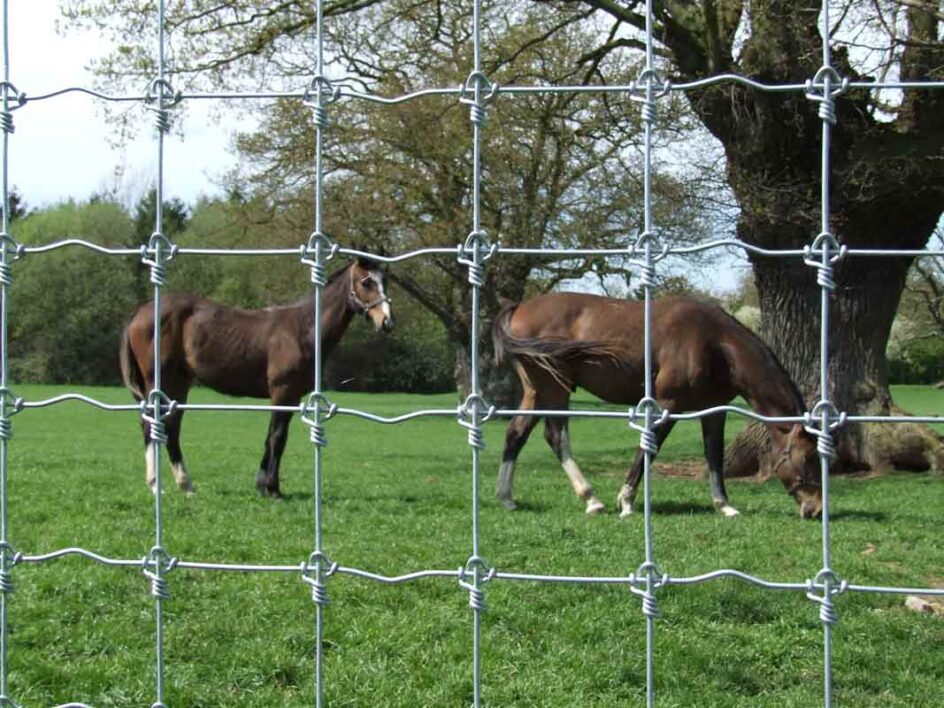
The LHT15/158/8 poultry netting uses a traditional hinged joint construction.
These joints connect the horizontal and vertical wires while allowing a degree of flexibility within the mesh.
This is particularly useful where the netting needs to follow changes in ground level or incorporate a turned-out section at the bottom.
The hinged design can also be used where the fencing needs to be angled or cranked as part of a particular installation.
Combined with the spring-like properties of high tensile wire, this creates a fencing material capable of maintaining tension while accommodating some movement.
The design is intended to provide a practical balance between rigidity and flexibility, making it suitable for a range of agricultural poultry fencing applications.
Galvanised Steel for Outdoor Durability
Chicken netting is frequently installed in exposed locations where it must withstand changing weather throughout the year.
Galvanising provides an important level of protection by coating the steel wire with zinc, helping slow corrosion and deterioration.
Our wire products are manufactured and supplied in the UK and galvanised to British Standards.
The galvanised finish is particularly valuable for poultry fencing because the material may remain permanently exposed to rain, damp vegetation and other outdoor conditions.
Regular inspection is still recommended, especially where the wire comes into contact with potentially corrosive substances or remains close to wet ground.
Any damaged sections, loose fixings or significant corrosion should be addressed to maintain the strength and effectiveness of the enclosure.
Choosing the Correct Chicken Netting
When selecting chicken netting, customers should consider the size of their enclosure, the type of poultry being kept and the level of protection required.
The 1800mm option provides a taller netting product, while the LHT15/158/8 versions offer a specified high tensile wire construction with a 158cm height and 80mm stay spacing.
Roll length is another important factor.
A 50m roll may be the most convenient choice for a compact poultry run or shorter fence line, while a 100m roll may be more suitable for a larger free-range area.
Customers should also consider the type of fencing posts, straining assemblies and fixings required to complete the installation.
Where predator exclusion is a priority, the mesh opening size and treatment of the lower fence edge should receive particular attention.
Choosing the correct fencing specification helps create a more effective enclosure while reducing the likelihood of unnecessary modifications after installation.
Installation Considerations
A strong chicken netting fence begins with suitable supporting posts and correctly constructed straining assemblies.
The chosen post spacing will depend on the type of netting, the ground conditions and the overall fencing design.
For high tensile poultry netting, correct tensioning is important to achieve the intended strength and flexibility.
The fence should be installed in accordance with the wire manufacturer’s guidance, avoiding excessive tension that could damage the mesh or its joints.
Where a section of the netting is turned out along the ground, the installer should ensure that the remaining upright height is appropriate for the enclosure.
Gateways and corners should also be checked carefully, as poorly fitted gates or openings between fence sections can undermine an otherwise effective boundary.
Routine maintenance should include checking wire tension, inspecting fixings and removing vegetation where it may interfere with the fencing.
Why Choose Chicken Netting from FSF Fencing Supplies?
At FSF Fencing Supplies, we provide agricultural fencing products for farmers, livestock owners, fencing contractors and rural property managers.
Our Chicken Netting range includes galvanised wire options suitable for poultry containment, including Light High Tensile fencing supplied in 50m and 100m rolls.
With different specifications available, customers can select fencing materials to suit their enclosure dimensions, installation requirements and preferred roll length.
All our steel and wire products are manufactured and supplied in the UK and galvanised to British Standards, providing dependable quality for agricultural fencing projects.
Whether you are constructing a new chicken enclosure, expanding a free-range poultry area or replacing an existing fence, FSF Fencing Supplies can help you find suitable wire netting and associated fencing materials.
Contact FSF Fencing Supplies for more information about Chicken Netting, roll specifications and our wider range of agricultural and stock fencing products.


Reviews
There are no reviews yet.